


### Blog Post:
soundproof home office solutions are becoming essential for anyone working remotely today. Noise disrupts focus, makes video calls awkward, and leaves even the best productivity hacks useless if your workspace is not properly isolated. This guide gives clear, up-to-date strategies you can actually use—even on a tight budget—to make your home office as quiet as possible.
Key Takeaways
- 27% of remote or hybrid workers report noise hurting work quality, and cramped or shared home spaces are a top culprit. (Source)
- Effective soundproofing usually requires combining physical barriers (like doors and panels) with smart placement of sound-absorbing materials.
- Many common “cheap fixes” barely work, and skipping over doors, floors, or ceilings often leaves you frustrated.
- What Soundproofing Your Home Office Really Means
- How to Soundproof a Home Office: Step-by-Step
- Advanced Analysis & Common Pitfalls
- Conclusion
- FAQ
What Soundproofing Your Home Office Really Means
Soundproofing a home office is about creating a workspace where outside noises—like busy streets, kids, pets, or loud neighbors—cannot easily disturb you. According to recent workplace studies, 27% of remote or hybrid staff said noise hurt the quality of their work, and 69% of all employees are dissatisfied with noise at their primary workspace (Flexos, SoftDB). This is especially true in apartments or shared homes where walls are thin and space is tight.
The core of soundproofing is blocking transmission of sound (with solid barriers) and absorbing echo or reverberation (with soft materials). Unlike acoustic treatment—which just improves the “quality” of sound inside a room—true soundproofing keeps unwanted noise out, and your conference call private.
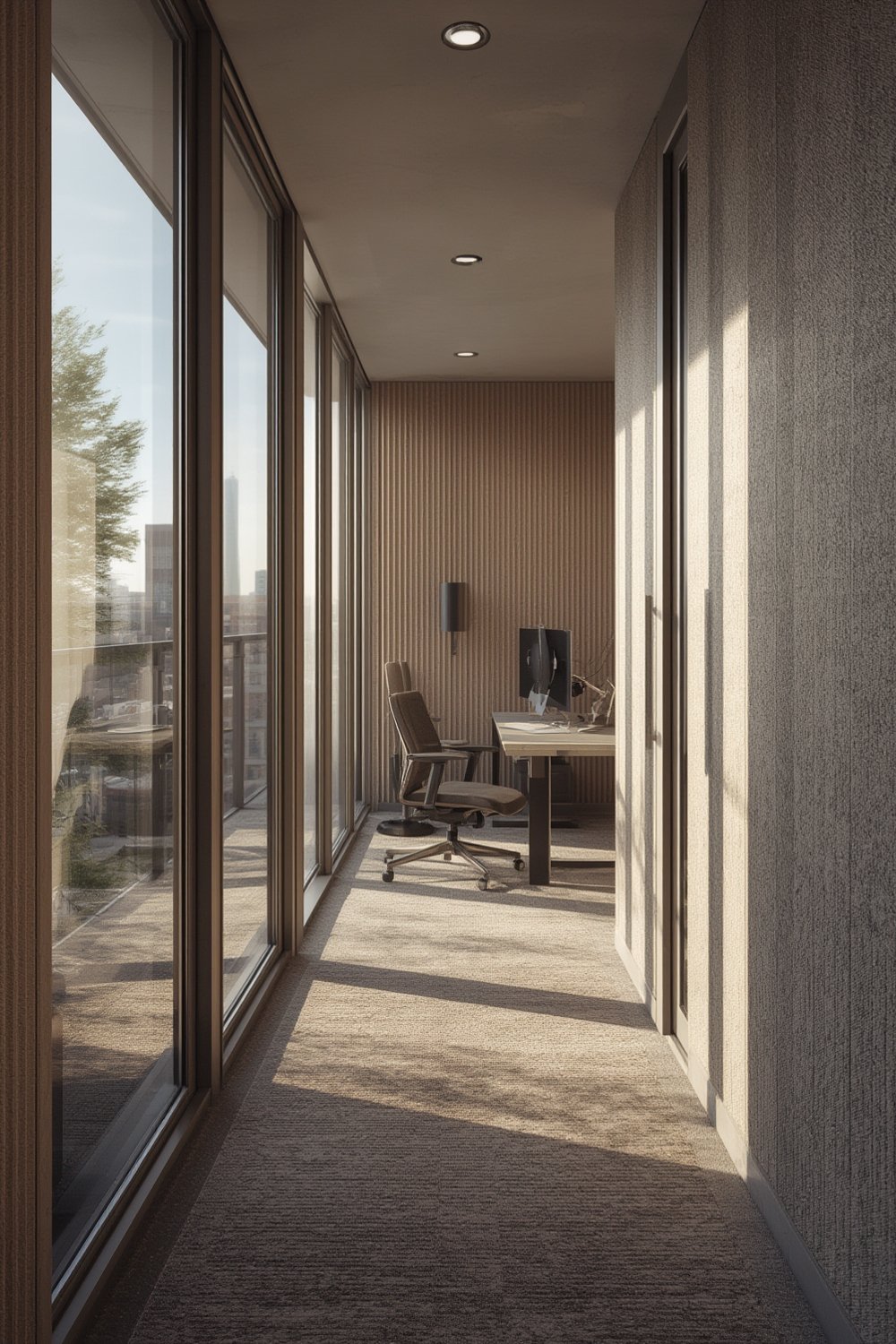
How to Soundproof a Home Office: Step-by-Step
Follow this realistic blueprint to achieve a soundproof home office, whether you’re DIY-minded or considering professional help:
- Find and Diagnose Noise Hotspots: Sit in your office during a typical workday. Identify exactly where sound is leaking in—doors, windows, walls, floors, or ceilings.
- Seal Gaps and Cracks: Use weatherstripping, acoustic sealant, or even flexible caulk to seal around door frames, window edges, and baseboards. A large percentage of noise comes through tiny gaps.
- Upgrade the Door: Hollow-core doors transmit sound easily. If you can, replace with a solid wood-core door or an acoustically rated model. For rentals, consider a door sweep and stick-on seals.
- Layer the Walls: If you own your space and can invest, consider adding a second layer of drywall with Green Glue between layers or using soundproof drywall panels.
- Add Acoustic Panels or Foam: For apartments or nondestructive fixes, hang dense fabric panels or proper acoustic foam on the most exposed wall(s). Covering at least 15-20% of the wall area makes a noticeable difference.
- Treat Floors and Ceilings: Thick rugs with dense pads dampen footsteps and echoes. If you’re on an upper level, decouple the ceiling with sound-isolating clips or layers—though this is rarely DIY-friendly.
- Control Inside Noise Sources: Use soft furnishings like curtains, bookshelves, and plants to reduce interior echo. Quiet mechanicals (like fans or HVAC) reduce background noise.
- Schedule and Communicate: When possible, coordinate with roommates or family about crucial meeting times to reduce interruptions—sometimes the best soundproofing step is non-physical.
If you’re exploring bigger projects—like updating to a smart electrical panel for future tech integration, check out this expert guide on a smart electrical panel upgrade to avoid noise from electrical hums or appliances adjacent to your office.
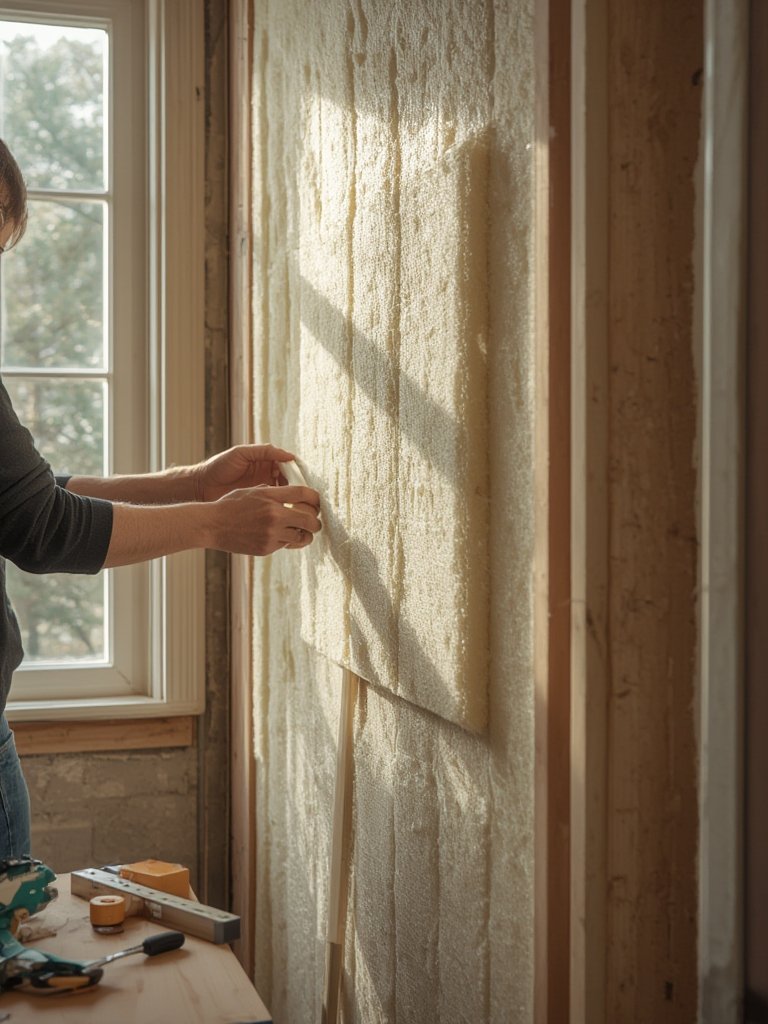
While cosmetic tricks can help, true soundproofing is only as good as your weakest barrier. Don’t forget doors, ceilings, and unexpected entry points. For a stylish and functional look, adding fluted wall panels DIY can combine aesthetics with modest sound dampening.
Lastly, remember that heat and sound go hand-in-hand. If upgrading insulation, consider the dual benefit of a heat pump water heater to regulate both temperature and unwanted HVAC noise in your home office area.
Advanced Analysis & Common Pitfalls
Many popular home office soundproofing “hacks” either fail to block real-world noise or are misunderstood. Here’s where most people stumble—and how to sidestep the costly or disappointing outcomes.
- Cheap foam panels barely block outside noise. Acoustic foam helps reduce echo inside your office but does not stop deep bass or external voices. If true sound isolation is critical (recording, privacy, etc.), you need mass-loaded materials or dedicated soundproof drywall.
- Doors and windows are often ignored. Sound leaks mostly through these weak points. Weatherstripping and sealing frames offer the best cost-to-impact ratio for renters and budget DIYers.
- Treating only one surface doesn’t work. For meaningful improvement, you must “treat the envelope”—addressing all surfaces in the room. Neglecting floors and ceilings makes walls and windows almost pointless.
- Combining acoustic comfort with energy upgrades. If your office is near noisy mechanicals or outside walls, pairing soundproofing with an energy upgrade (like new insulation or a whole home generator installation) can save money and prevent future headaches.
- Measurement and proof are rare. Most “before and after” soundproofing claims are anecdotal. Few easy, affordable DIY tools exist to measure decibel reduction in a home setting. Expect realistic, not perfect, results.
| Method | DIY Difficulty | Physical Barrier? | Best Use Cases | Potential Drawbacks |
|---|---|---|---|---|
| Acoustic Foam Panels | Easy (stick-on) | No | Echo reduction, modest privacy | Barely blocks outside noise |
| Soundproof Drywall | Advanced (construction) | Yes | Permanent setups, new builds | Expensive; rarely DIY-worthy |
| Sealing Gaps (Caulk/Strips) | Very Easy | Partial | Renters, first fixes | Limited against loud/low sounds |
| Rugs/Curtains/Furniture | Easy | No | Reduce echo, mild dampening | Minimal effect on neighbors’ noise |
| Upgrading Doors | Moderate | Yes | High-traffic areas, shared housing | Can be costly, installation hurdles |
For renters or those updating older homes, prepping for upgrades—such as a future home EV charger installation—can streamline electrical and structural improvements and reduce disruption noise down the line.
Conclusion
Designing a soundproof home office is about strategy, not just gadgets. By sealing air gaps, reinforcing weak spots, and combining absorption with real barriers, you can make a noisy apartment or house much more workable. Don’t fall for “one quick fix.” Instead, apply these layered solutions for tangible results.
Start experimenting—even just sealing the door and adding a rug—and build from there. For next steps or to pair your soundproofing with other smart home improvements, browse our training on the best heat pump water heater or explore ADU garage conversions for the ultimate home office.
Ready to reclaim your focus and meeting privacy? Commit to one change today—and share your soundproof home office wins or challenges in the comments below.
FAQ
Can I soundproof my home office without permanent changes?
Yes. Use removable options such as weatherstripping around doors, thick curtains, rugs, bookshelves, and drop-in acoustic panels. moving blankets and stick-on foam are popular among renters.
What is the most effective first step?
Seal visible gaps around doors and windows—air leaks are the main path for sound. This simple change often makes a significant difference for under $30.
Is acoustic foam enough to block neighbor noise?
No. Acoustic foam mainly absorbs echo inside the room. To block neighbor noise or external traffic, use mass-heavy barriers or upgrade the actual wall or door structure.
How much does professional soundproofing cost?
Costs vary depending on methods and local prices, but full-room upgrades with drywall and sound-rated doors run into the thousands. DIY improvements are possible at nearly any budget but expect modest results unless combining several approaches.
Can I combine soundproofing with energy efficiency upgrades?
Absolutely. Adding dense insulation or upgrading to energy-efficient options like a heat pump water heater can reduce unwanted noise from HVAC, plumbing, and outdoors while saving money on bills.
[…] upgrades may cause further headaches down the line. Sometimes, smaller improvements—like improved soundproofing or low-maintenance washable rugs—yield more daily enjoyment than high-end fixtures […]