


Home EV charger installation has quickly become a top priority for EV owners who want the convenience, control, and savings of charging at home. But without expert guidance, the process can lead to unexpected costs, code violations, and safety headaches. Here’s how to ensure your installation is efficient, compliant, and truly future-ready.
Key Takeaways
- Home EV charger installation costs vary by charger level, panel upgrades, and regional labor rates.
- Future-proof wiring, understanding safety codes, and leveraging incentives significantly impact long-term value.
- Always hire licensed, insured electricians experienced with EV systems to avoid warranty and safety pitfalls.
- What Home EV Charger Installation Really Means
- Step-by-Step Guide to Home EV Charger Installation
- Advanced Analysis & Common Pitfalls
- Conclusion
- Frequently Asked Questions
What Home EV Charger Installation Really Means
Installing a home EV charger is more than plugging in a device. It involves key decisions about charger type, electrical capacity, future needs, and local codes. Most homeowners install either a Level 2 charger (using a regular 120V outlet) or a faster Level 2 charger (requiring a new 240V outlet). The installation often requires new wiring, permits, and safety checks.
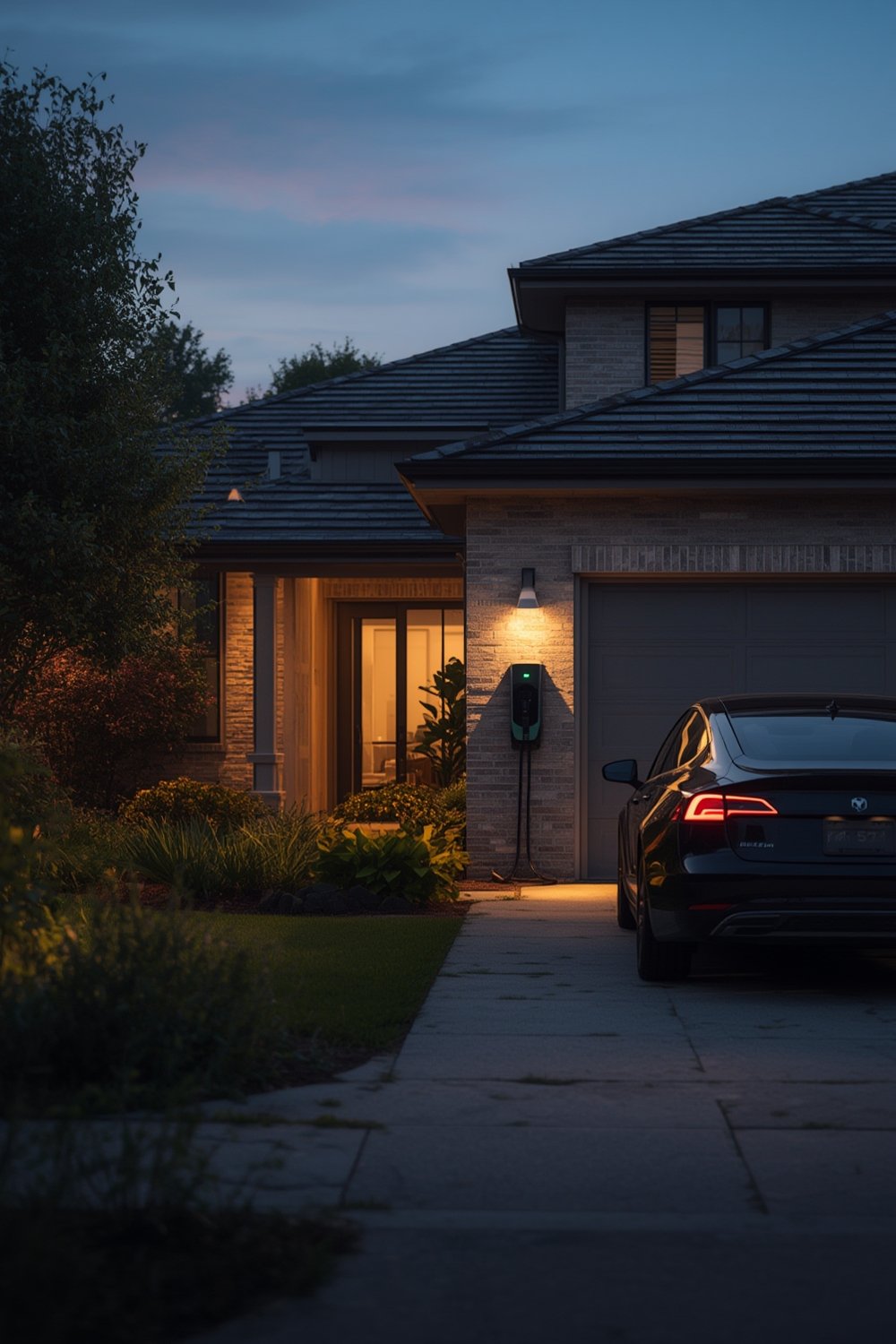
Why go through the process? A professionally installed charger gives you much faster, cheaper charging at home than public stations—especially Level 2 units, which can charge most EVs in just a few hours. The process protects your home’s electrical system, ensures insurance compliance, and often qualifies you for state or federal rebates (such as New Jersey’s up to $250 incentive).
If you’re still researching, compare this with our Tesla Wall Connector installation guide, or read about how to get an EV charger permit.
Step-by-Step Guide to Home EV Charger Installation
- Assess your charging needs.If you only drive a few miles daily, Level 1 (120V, slow charge) may be enough. For faster, nightly charging or multiple EVs, Level 2 (240V) is best. Estimate your daily electric vehicle usage and research your vehicle’s charging options.
- Check your electrical panel capacity.Most Level 2 chargers need a dedicated 40-50 amp circuit, ideally in a 200A panel with open breaker slots (read this guide). Older homes may need panel upgrades—sometimes doubling project costs.
- Choose the right charger and location.Decide between wall-mounted or pedestal chargers, consider cable length, and locate as close to your panel as possible to avoid expensive trenching. See our garage EV charger setup basics.
- Get quotes from licensed electricians.Seek bids from fully licensed and insured electricians experienced in EV installations. Confirm they’ll pull city permits and schedule inspections. Vet their references—many contractors show up unprepared for EV-specific code.
- Apply for permits and incentives.Your contractor should pull permits covering national and local codes like the National Electrical Code (NEC) Article 625 and GFCI protection. Investigate current rebates such as federal EV charging incentives. You’ll often need proof of permitted installation to qualify.
- Complete installation and pass inspection.A professional will run new wiring (often 6/3 NM-B or #8 THHN/THWN in conduit), install the outlet or hardwire the charger, and ensure correct breaker sizing. Inspectors check compliance and safety. See these EV charger inspection tips.
- Test your charger and register the warranty.Use the charger’s app (if available) for setup. Always register with the manufacturer for warranty coverage.
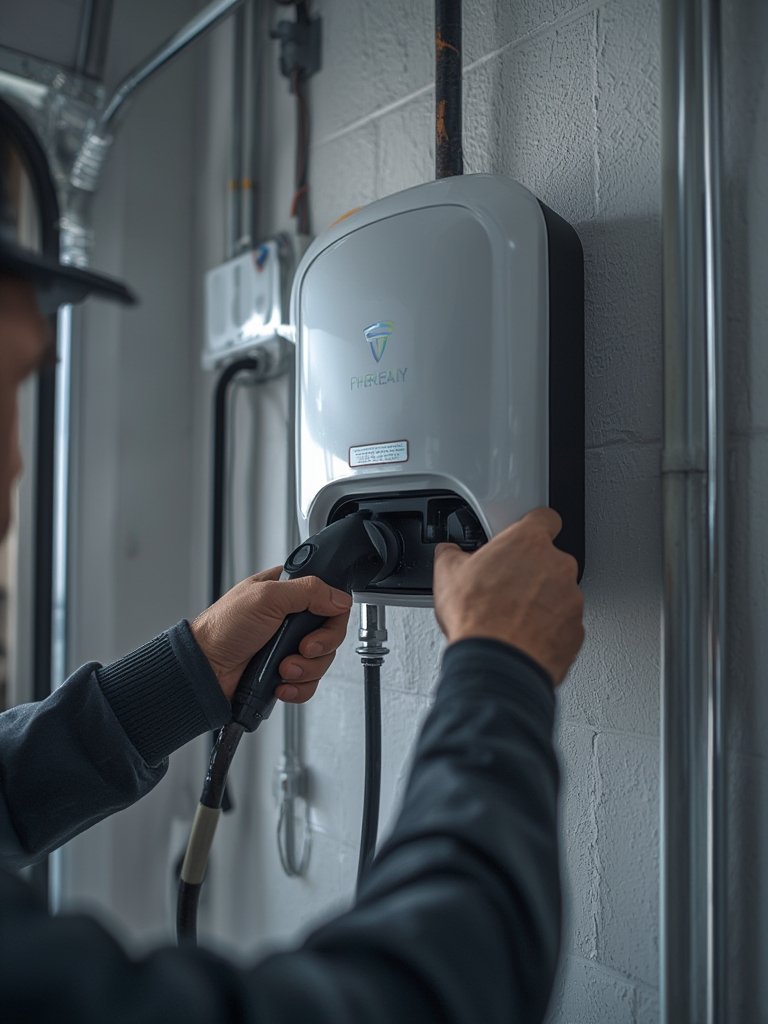
Be sure to request a written itemization from your electrician. This clarifies costs for the unit, permits, wiring, trenching, and unique site challenges. For more nuance, see our home EV charger installation cost breakdown.
Advanced Analysis & Common Pitfalls
Even with careful planning, home EV charger installation projects are prone to hurdles that can impact your budget, timeline, and safety. Based on the latest 2024 research:
- High cost for complex installs: Extensive trenching, distance from the panel, or a required panel upgrade can add $1,500-$4,000. It’s not uncommon for a simple $950 install in Austin, TX to balloon to $2,380 when distance and concrete are involved (details here).
- Permit delays & inspection failures: Scheduling and passing inspection is often slower than anticipated, especially in dense metro areas.
- Insufficient electrical capacity: Many homes (especially 100A panels) can’t support a 40-50A EV circuit without service upgrades. Ignoring this leads to failed inspections or reliability issues.
- Limited guidance on safety code: Top articles mention “high safety,” yet skip specifics like NEC code requirements, GFCI protection, and load calculations. Make sure your installer documents compliance.
- Forgetting about future-proofing: Most installs today don’t accommodate wiring for 48A or higher, yet future EVs demand more power.
Want to know if your investment will pay off? Review our home EV charger ROI calculator.
| Charger Level | Average Install Cost (2024) | Typical Upgrades Needed | Completion Time | Notes |
|---|---|---|---|---|
| Level 1 (120V) | $300-$600 | Often none if outlet exists | 1-2 hours | Slow charging (2-5 mi/hr); suitable for low usage |
| Level 2 (240V, 32-40A) | $700-$2,500 | Dedicated 40A+ breaker; new wiring | 3-6 hours | Fast charging (20-35 mi/hr); panel upgrade may be required |
| Level 2 (240V, 48A+) | $2,000-$6,000+ | Panel/service upgrade likely | 6+ hours | Future-proof; supports upcoming EVs |
If you run into complications, rely on a professional service—DIY attempts usually void warranties and risk safety per Consumer Reports.
Conclusion
Home EV charger installation is a smart move, but it’s easy to overspend or hit avoidable snags if you skip steps, under-plan, or try to DIY. To maximize results: assess your electrical system honestly, hire credentialed pros, document permits, and ask about wiring for tomorrow’s larger EVs. For deeper advice, explore our Level 2 vs Level 3 charger comparison or home EV charger safety tips.
Ready to start your home EV charger installation? Get multiple quotes from qualified electricians and check for current incentives in your area to ensure you maximize your budget.
Frequently Asked Questions
How long does a typical home EV charger installation take?
Most installations can be completed in one day if your electrical panel is ready. A simple Level 1 or straightforward Level 2 install takes 2-4 hours. Panel upgrades or long wire runs can extend to several days.
Can I install a Level 2 EV charger myself?
No. DIY installs usually void the charger’s warranty and can violate electrical codes. Always hire a licensed, insured electrician experienced with EV systems to ensure safety and rebate eligibility.
What incentives or rebates are available for home EV charger installation?
Programs vary by state and city. For example, New Jersey offers up to $250 for qualified Level 2 chargers. Always check local utility companies for off-peak rates and state rebate portals for current offers.
Does my home need a panel upgrade for a Level 2 charger?
Possibly. If your electrical panel lacks capacity or open slots, you may need a service upgrade—usually required for higher-amp chargers or if your home is equipped with a 100A panel. Have an electrician assess your panel first.
How can I find a reputable EV charger installer near me?
Start by requesting quotes from multiple licensed, insured electricians. Ask about their EV installation experience, permit process, and references. Avoid anyone who discourages permits or suggests “under the table” work.
[…] Want even more savings? Pair your installation with an energy-efficient electric vehicle charging station—learn how in our Home EV Charger Installation Guide. […]