


### Blog Post:
Fluted wall panels DIY projects have exploded in popularity thanks to their striking texture, relatively accessible installation, and budget-friendly alternatives to professional options. From creating luxury-style accent walls in living rooms to adding modern drama in bathrooms, fluted panels let homeowners achieve high-end impact without the designer price tag.
Key Takeaways
- DIY fluted wall panels offer affordable, upscale style—costs start as low as $5 per square foot for PVC, climbing to $50 for premium wood.
- Proper prep, flexible panels, and the right materials make installation realistic for most, but corners, outlets, and fireplaces present extra challenges.
- Moisture resistance, durability, and resale value differ by material—PVC is best for bathrooms, engineered wood for living spaces.
- What Are DIY Fluted Wall Panels and Why Use Them?
- DIY Fluted Wall Panels: Step-by-Step Installation Guide
- Advanced Analysis and Common Pitfalls
- Conclusion
- FAQ
What Are DIY Fluted Wall Panels and Why Use Them?
DIY fluted wall panels are decorative boards with a grooved, three-dimensional texture that creates dramatic lines across any wall. Instead of flat paneling, these flutes catch light and add architectural interest, transforming basic rooms into more dynamic spaces.
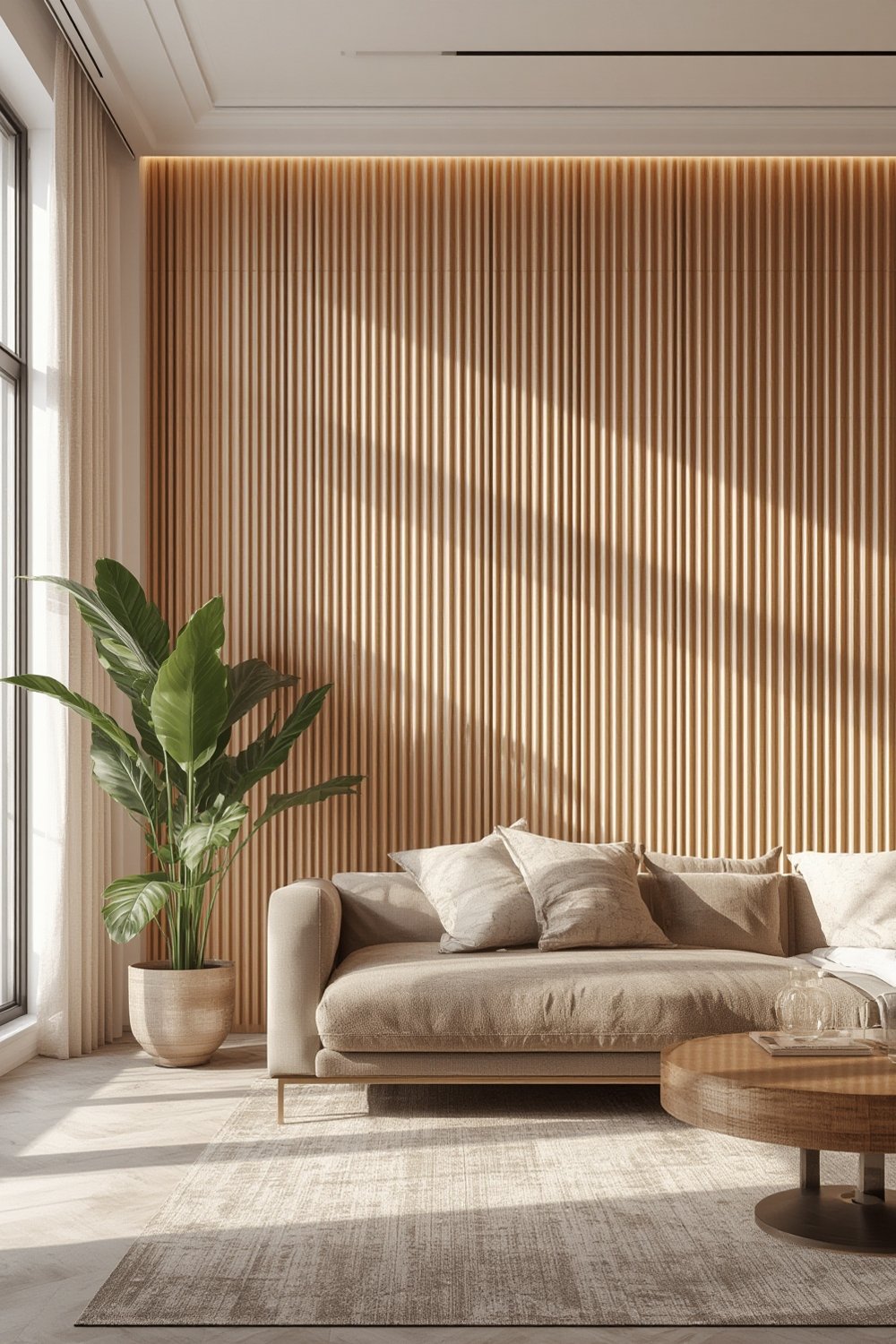
Fluted wall panels are popular in 2024’s interior design for three main reasons:
- Visual Impact: The vertical lines draw the eye upward, making ceilings seem taller and adding modern character—even in small or bland rooms.
- Material Flexibility: You can choose from budget stick-on panels, water-resistant PVC for bathrooms, or premium real wood veneers for living spaces and fireplace surrounds.
- DIY-Friendly: Homeowners can install these panels with construction adhesive and basic hand tools, skipping the mess and expense of a full contractor job.
That said, not all rooms or wall surfaces are equally easy—fireplaces and bathrooms each have unique requirements for moisture or heat resistance. And while DIY can save thousands compared to pro install, precise measurements and surface prep matter if you want installation to look professional. Source
Looking to upgrade your home’s energy efficiency at the same time as your decor? Check out these 7 proven ways to cut energy bills with a heat pump water heater.
DIY Fluted Wall Panels: Step-by-Step Installation Guide
From choosing the right panel material to achieving smooth corners and seamless outlets, here’s exactly how to install fluted wall panels—whether you’re working with drywall, plaster, or tile.
Step 1: Measure and Plan Your Layout
- Measure wall width and height; factor in doors, windows, outlets, and any wall irregularities. Multiply for total square footage.
- Add 5-10% for cuts, waste, and unforeseen challenges—especially if wrapping around corners or dealing with fireplaces.
- Determine how many panels you’ll need. For standard stick-on panels (~14.7cm width), simply divide wall width by panel width.
Step 2: Choose and Prep Your Panel Material
- PVC/WPC panels are best for wet bathrooms or laundry rooms.
- MDF or engineered wood (real veneer) give a realistic touch for living rooms and fireplace surrounds, but require acclimatizing to room temperature/humidity overnight (to avoid future warping).
- Solid wood is expensive, requires more finishing, and should be humidified in-place for at least 24-48 hours before install.
For durability and resale value, check out the side-by-side comparison in Section 3 below.
Step 3: Wall Surface Preparation
- Drywall/plaster: Wipe clean, fill holes, remove old nails or debris, ensure as level as possible.
- Tile: Use sandpaper or bonding primers if needed for glue compatibility. Test adhesive on a sample area before proceeding.
Step 4: Cutting and Dry Fitting Panels
- Use a circular saw, miter saw, and/or hand plane to cut panels to desired height.
- Bendable veneer panels (usually ~44.1″ wide) are great for wrapping around corners, fireplace bump-outs, or columns without seams. See example.
- Dry-fit all panels before gluing—mark outlet positions, awkward edges, and check alignment before any adhesive is applied.
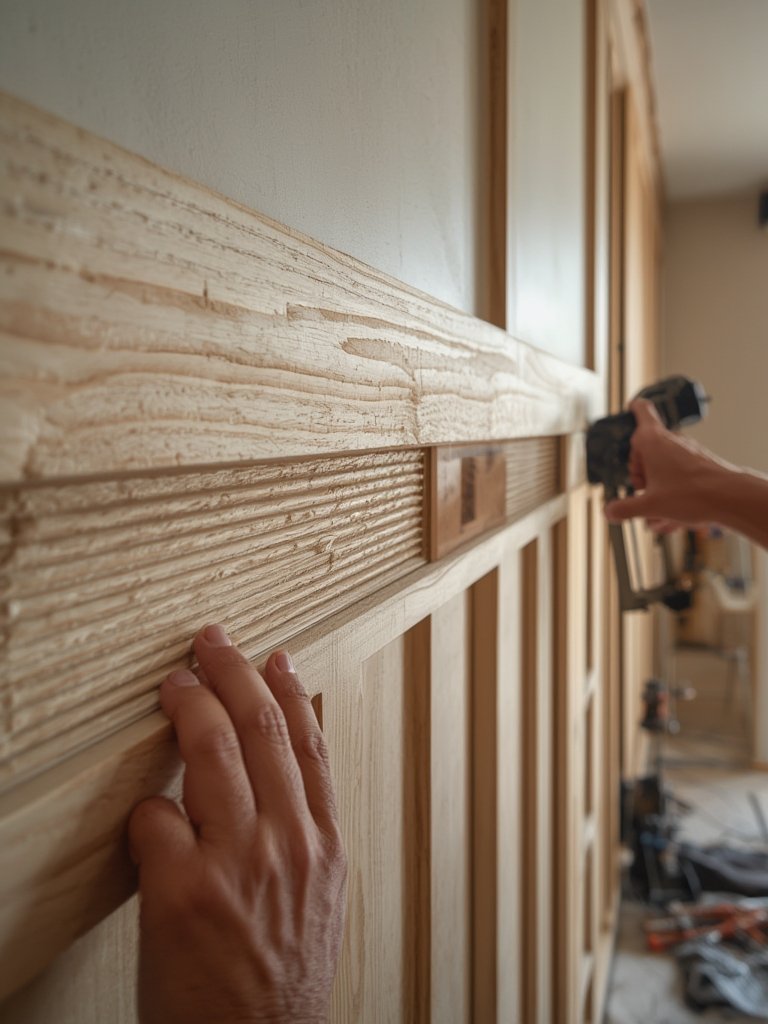
Step 5: Applying Adhesive and (Optional) Fasteners
- Apply high-strength construction adhesive to the back of each panel in a zig-zag pattern; for bathrooms or tile, use adhesives rated for wet environments.
- Press panel to wall and hold for 30-60 seconds. For solid wood/MDF, tack near ends with a pneumatic finish nailer for faster install and solid hold.
- Stick-on panels (like Shopee’s $27 option) can be installed with only glue and pressure—allow 24 hours to cure.
Step 6: Trimming and Seamless Finish
- Use a jigsaw or multi-tool to notch out for outlets (typically one per 80 square feet of wall).
- Trim and sand panel edges to smoothly wrap corners or meet baseboards and ceiling lines.
- Fill nail holes or end gaps with color-matched putty or caulk if needed. Wipe excess immediately for a clean finish.
For more ideas on future-proofing your home, see our in-depth guide on home EV charger installation.
Advanced Analysis and Common Pitfalls
While DIY fluted wall panels are clearly achievable, there are hidden challenges that can sour your project. Let’s break down the most frequent pain points and how the materials compare:
Common Problems and Realistic Issues
- Uneven Walls/Ceilings: Most homes have at least some waviness, which can make panel alignment tricky and cause gaps along ceiling or baseboard lines. Expect to use caulk or trim to hide small misalignments.
- Corners and Fireplace Edges: Wrapping around corners, especially on fireplace surrounds or columns, is the hardest part for DIYers. Flexible (bendable) veneer panels make this easier, but cutting and dry-fitting is a must.
- Measure Twice, Cut Once: Panels aren’t cheap—especially wood. A single measuring error or awkward cut may waste a $40+ panel.
- Bathroom Installs: Even “water-resistant” MDF or wood can swell or warp over time. PVC/WPC synthetics are always safer for high-moisture areas.
- Electrical Fittings: Outlets must be measured, marked, and cut precisely. Inaccurate openings look sloppy and are hard to fix later.
- Cost Overruns: Professional installs can run $1,000–$2,000 per room, but even DIY can hit $500–$2,000 for a 100-square-foot wall with premium wood, especially after tool or waste overruns. Urban areas may also have 20–40% higher material costs. Source
Material Comparison Table
| Material | Durability | Moisture Resistance | Maintenance | Cost / sq ft | Best Use-Case |
|---|---|---|---|---|---|
| MDF (veneer) | Medium–High | Medium | Medium (prefinish helps) | $8–25 | Living room |
| Wood (solid / engineered) | High (solid); Medium–High (engineered) | Low–Medium | High (acclimate, finish) | $8–50 | Living room, fireplace |
| PVC / WPC | High (stable) | High | Low | $5–18 | Bathroom |
Curious about energy savings from appliance upgrades? Catch our latest breakdown of the best heat pump water heaters and learn where these panels fit in sustainably modern homes.
Top Installation Tricks Not in Competitor Articles
- Bendable Panels for Corners: Flexible fluted veneer panels allow seamless wraps on fireplace returns, islands, or even rounded corners—no unsightly corner joints to fill.
- Stick-On Simplicity: For small accent walls, stick-on panels can be applied in an afternoon with glue alone—just measure, cut, and press for a professional look without power tools. Source
- Prefinished Veneer Consistency: MDF panels with real wood veneer arrive prefinished for easy installation, saving you days of painting or sealing—and ensuring color consistency throughout your wall.
Conclusion
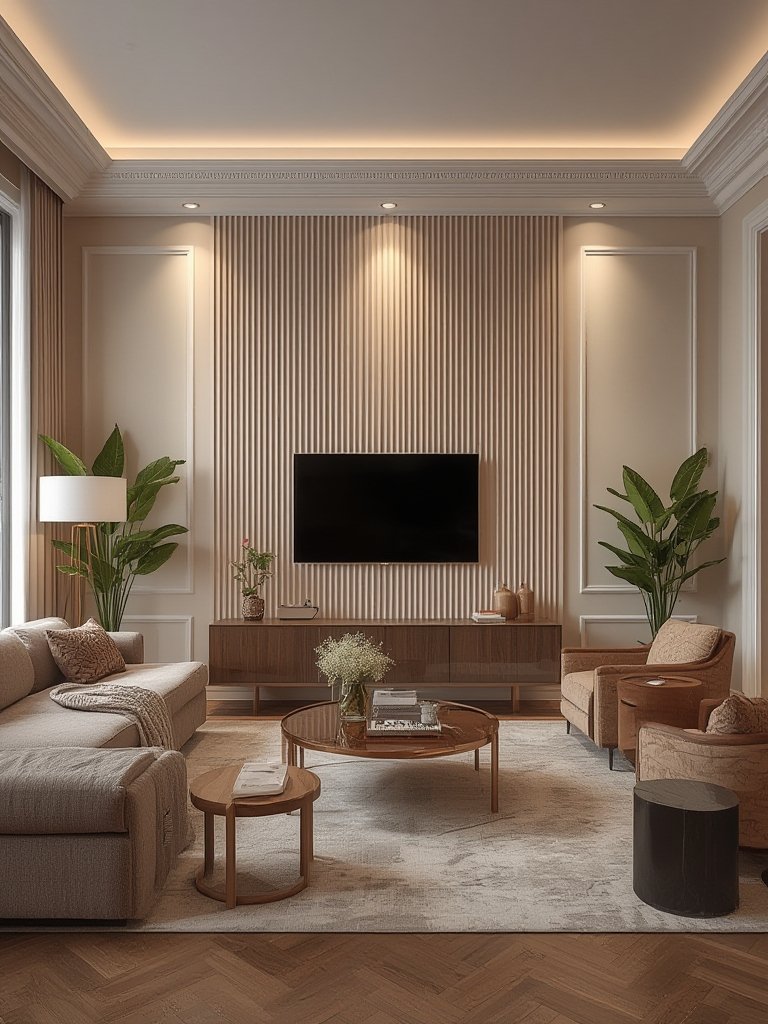
DIY fluted wall panels offer homeowners a smart, customizable way to upgrade interiors without hiring a contractor. From cost-effective stick-on PVC for bathrooms to luxurious real wood for feature walls, fluted panels suit any style and budget with the right strategy. Take your time with measuring, preparation, and panel selection—especially around outlets and fireplaces—and you’ll get a result that dramatically boosts visual appeal and, potentially, your home’s resale value.
Ready to transform your own space? Start your fluted wall panels DIY project today for instant design impact and long-term satisfaction.
FAQ
What is the cheapest way to install DIY fluted wall panels?
Use pre-made stick-on PVC panels with glue on smooth drywall or painted surfaces. These start at $5–$15 per square foot, and you only need basic measurement tools. No nail gun required.
Can I use MDF or wood fluted panels in bathrooms?
MDF or wood panels are not ideal for high-moisture areas like bathrooms. PVC or WPC panels offer much better water resistance, lower maintenance, and typically cost less.
What are the hardest parts about DIY fluted panel installation?
The most challenging steps are measuring and cutting accurately, wrapping corners (especially around fireplaces), and making tight cutouts for outlets or switches. Take extra time in these areas to avoid gaps or waste.
Do fluted wall panels increase my home value?
There is no official data, but modern, on-trend accent walls typically improve buyer appeal—especially in living rooms. Higher-quality materials (wood veneer, prefinished panels) are more likely to have a positive impact on resale value.
Do I need special tools for installation?
For most stick-on panels: measuring tape, pencil, and a handsaw or jigsaw are enough. For wood or MDF: add a miter saw, finish nailer, and caulk gun. Always wear protective gear when cutting panels.
—
[…] of layering in design upgrades? Pair your new rug with budget-friendly fluted wall panels DIY installed for instant, modern impact—without hiring a contractor. Or, inject personality with […]
[…] with smaller upgrades like DIY fluted wall panels for a high-end touch on a […]
[…] installation fits especially well into modern renovation themes, such as DIY fluted wall panels for living rooms or integrating washable rugs for high-traffic zones. This adaptability helps explain recent surges […]
[…] light quality with fluted wood panels or slats. They’re trending for a reason—diffusing light while adding texture and rhythm for […]
[…] like RoomGPT, Planner 5D, and Coohom now let users experiment with various decor trends (including DIY fluted wall panels or color drenching paint) without committing to actual paint or materials. This technology puts […]